Home
» Aegean world, Cyprus
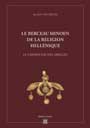
Le berceau minoen de la religion hellénique

by Jan M.F. Van Reeth. — In French. Everywhere one could see a Lady appearing in Minoan times, traditionally interpreted, from the times of her discovery at the beginning of the 20th Century, as a Mother Goddess, Mistress of the Animals, graciously protecting crops, harvests, offspring and seasons. This book presents her in a very different way (details).

85,00 €
 

= Paper =

 
Jacques VANSCHOONWINKEL. — This article deals with nature in the Aegean world. Indeed, the plant world is very present in the representations of cultic scenes of the Minoan, Cycladic and Mycenaean worlds, whether in the form of floral offerings, by the presence of the tree or by the image of landscapes…
 
14,50 €
 

= Paper =

 
Jan M.F. VAN REETH. — Minoan mythology was first and foremost an allegorical transposition of the world of bees. Some other ancient Greek words and names, that apparently are part of a linguistic, pre-Hellenic substrate also appeared to be of the same Semitic origin…
 
/
 
Sara LOPEZ. — The ‘Au series’ is a restricted group of six Linear B tablets dated to the Late Bronze Age and found in households located immediately outside the walls surrounding the site of Mycenae. These documents, which bear lists of personnel…
 
14,50 €
 
Jacques VANSCHOONWINKEL. — Women occupied an important place in the Aegean world of the Bronze Age, as evidenced by the clearly predominant female presence in the iconography of the period. This article focuses on the role of women in Aegean religions…
 
14,50 €
Milet entre Mycéniens et Hittites

= Paper =

J. VANSCHOONWINKEL. — In the second half of the 15th century B.C., the Mycenaeans replaced the Minoans in Miletus, as shown by archaeological evidence and Hittite records that mention Miletus, under the name Millawanda, and the land of Aḫḫijawā…

Details | Volume | Other papers

14,50 €
Les Peuples de la Mer d’après une lecture archéologique des reliefs de Médinet Habou

= Paper =

 
J. VANSCHOONWINKEL. — Despite the progress of historical research, speaking about the Sea Peoples is a delicate undertaking. Texts deliver few relevant indications on their origin…
 
14,50 €
La chèvre en Asie Mineure méridionale et égéenne dans l’Antiquité. Fragments d’histoire sociale
O. CASABONNE. — At Meydancıkkale (ancient Kiršu/i) in Rough Cilicia, many horns of goats have been found in the sector of the stores just to the South of the fortified entrance…
 
14,50 €
Un rare exemple de scène champêtre à Akrotiri de Théra

= Paper =

 
J. VANSCHOONWINKEL. —
This short article analyses the pastoral scene represented in the the Miniature Fresco from the West House at Akrotiri on Thera. This is an iconographic theme quite exceptional in Aegean art, little interested in everyday life.
 
14,50 €
Evolution of the Scale Armour in the Ancient Near East, Aegean and Egypt. An Overview from the Origins to the Pre-Sargonids
F. DE BACKER. — À première vue, l’armure d’écailles qui était utilisée au Proche-Orient ancien, en Égypte et dans le monde égéen contemporains n’a encore jamais été étudiée ou survolée en tant qu’ensemble…


14,50 €
Le singe dans le monde minoen et cycladique
J. VANSCHOONWINKEL. — The representations of monkeys are numerous in the Minoan and Theran art although the monkey is not an animal native of the Aegean…
 
14,50 €
Chypre, Rhodes et l’Anatolie méridionale : la question ionienne
O. CASABONNE, J. DEVOS. — Examination of the Aegyptian, Assyrian, Babylonian, Biblical and Achaemenid texts, indicates that the “Ionians” (Yaw/mnayi, Yawan, Yauna) were not only Greek and Cypriot populations, but also Anatolian populations…
 
14,50 €
L’achéen Achille est-il l’ancêtre du philistin Goliath ? À propos de l’armement et de la technique de combat du Philistin

= Paper =

 
J. VANSCHOONWINKEL. — After a first paper devoted to the iconographical evidence from the temple of Ramesses III at Medinet Habu, this one analyzes the weapons of the Philistines from the textual evidence of the Old Testament, especially the description of the duel between Goliath and David. The scale-corset, the greaves of bronze, the javelin likened to a « weaver’s beam » and the singular contest give us some interesting information. In the problem of the supposed Aegean roots of the Philistine material culture, a close examination of the weapons and the singular contest shows that, apart from the greaves, they are typical in the ancient Near East at the end of the second millennium B.C.
 
14,50 €
Les rapports monétaires entre Chypre et l’Asie Mineure méridionale à l’époque achéménide

A. DESTROOPER. — Some Cypriot coins have been found in hoards and isolated in Southern Asia minor…

Details | See the Volume | See the other papers

14,50 €
La double hache minoenne et l'Anatolie

= Paper =

J. VANSCHOONWINKEL. — This contribution discusses the supposed Anatolian origin of the Minoan double axe suggested by many archaeologists and historians. The Cretan archaeological and iconographical evidence and the Anatolian one are firstly analysed…

Details | See the Volume | See the other papers

14,50 €